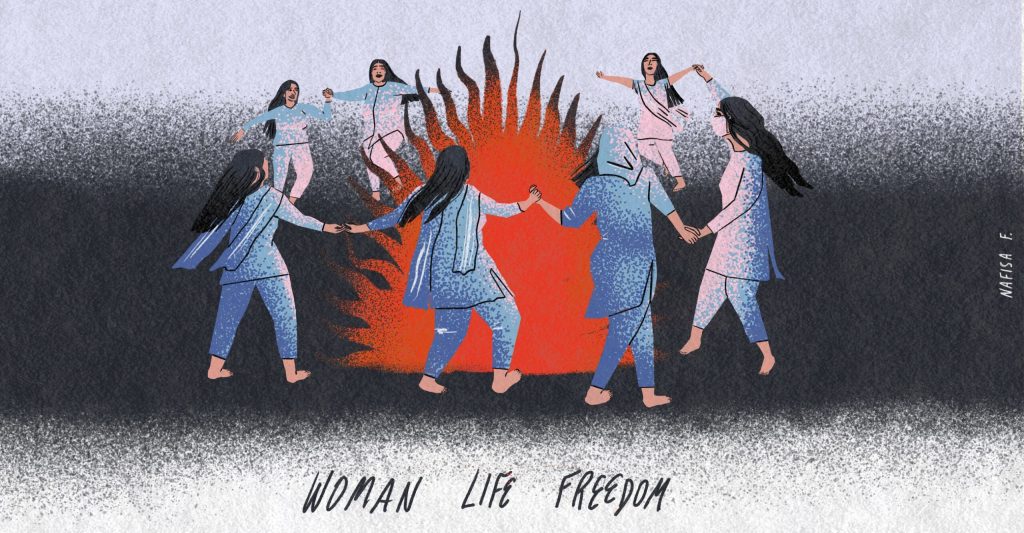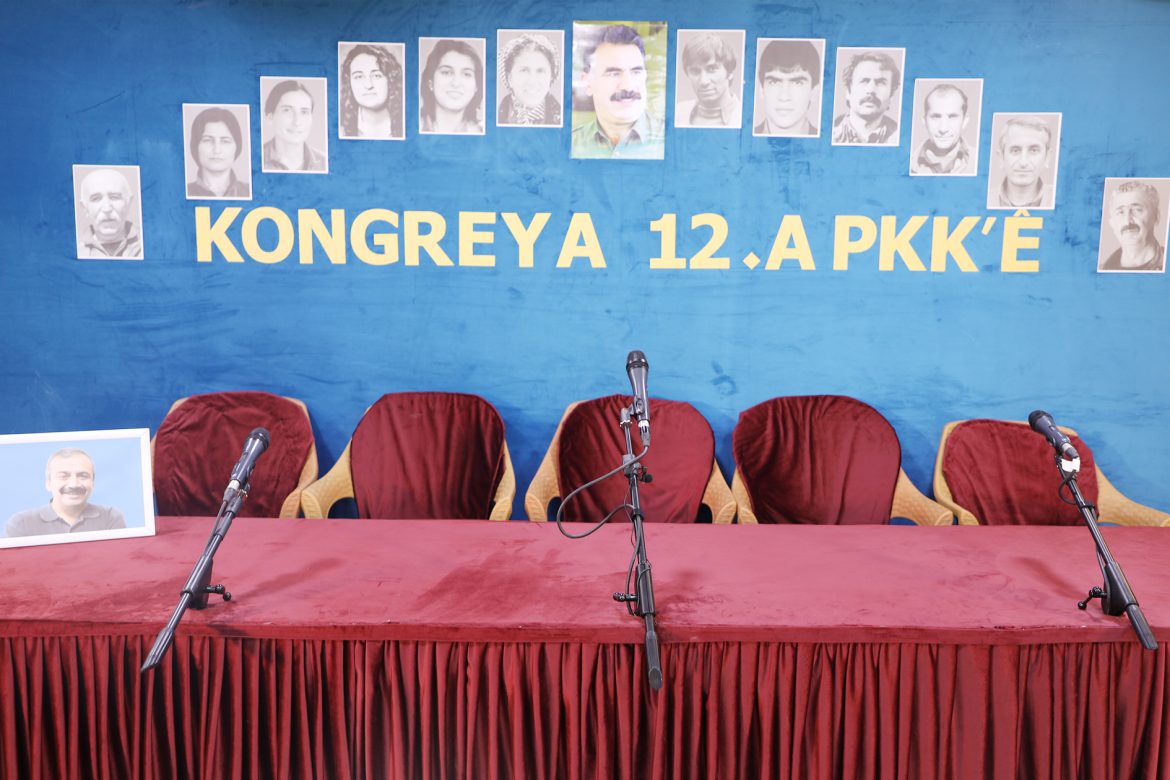
3 – The Multilayered Nature of Peace Building. Peace and Democratic Society Building from a Jineolojî Perspective
We republish the third part of the article “The Multilayered Nature of Peace Building.” To read the first part click here; for the second part click here.
Berfin Güneş
Rêber Apo’s call for “Peace and Democratic Society” dated February 27th, 2025, represents not merely a technical initiative aimed at ending armed conflicts, but also a project of profound social transformation. This transformation transcends understanding peace solely as a state of non-conflict; it aims to make it a way of life intertwined with the founding principles of democratic society.
In this context, the call is not only a political plan, but also has the character of a manifesto for social and cultural transformation. At the theoretical and practical center of the call lies the accumulation of over 40 years of struggle, theory and experience of the Kurdistan Freedom Movement and the Kurdistan Women’s Freedom Movement. This accumulation offers not just a reference point for peacebuilding, but also a methodological and ethical framework.
Peace Is Possible Through Social and Cultural Reconstruction
The movement’s approach to peace represents a radical break from traditional elite-centered and statist peace processes. It criticizes modernity’s hegemonic understanding of peace as an “epistemic violence” imposed by the Westphalian nation-state model that excludes and renders invisible all other forms of knowledge and ways of life. This critique not only exposes the deficiencies of the existing system but also offers a radical paradigmatic perspective that transforms peace into a space of epistemic resistance. The approach constitutes an original model at both theoretical and practical levels as a fundamental response to the crisis of the approximately five-thousand-year-old statist civilization system. Thus, peace is addressed not merely as the termination of conflict, but as a process that progresses simultaneously with social and cultural reconstruction.
Kurdish Women’s Approach to Peace
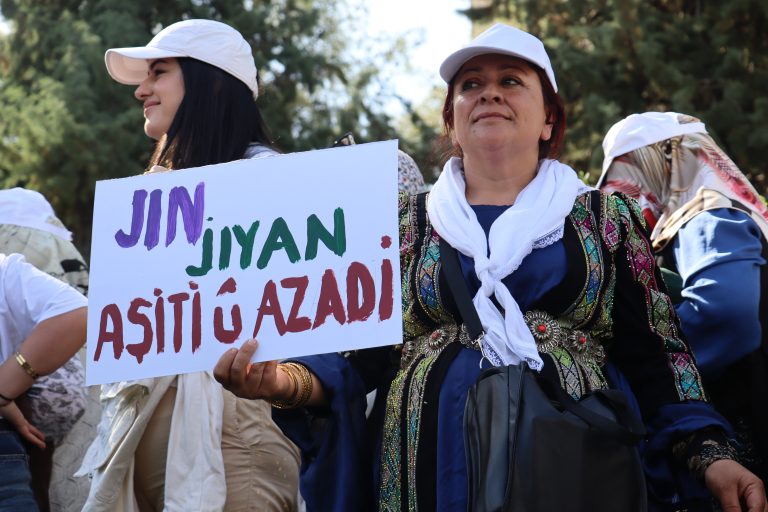 The Kurdish women’s approach to peace distinctly differs from Western feminisms and traditional leftist movements. At the foundation of this difference lie the “Democratic Civilization” paradigm (a societal model where peoples govern themselves, as opposed to the state-centered, hierarchical model) which views women’s liberation as the essential dynamic of social transformation and democratization, and Jineolojî (women’s science), its direct epistemic expression. Jineolojî is not merely “women’s studies” but an alternative knowledge system developed against the totalitarian and male-dominated structure of modern scientific understanding. It proposes the reconstruction of knowledge on historical, mythological, philosophical, sociological and ethical foundations by opposing the dualistic mentality imposed by Western rationalism (reason-emotion, male-female, human-nature). This approach enables an ontological (concerning the meaning of existence and life) transformation project by transcending the narrow identity politics boundaries affecting today. It goes beyond statist-modernist paradigms, synthesizes the ancient communal values of the Middle East with women’s liberation, and develops an original ideological-struggle style. Thus, peace becomes not only a political goal, but also the epistemological (concerning the source and nature of knowledge) and cultural ground for the reconstruction of democratic society.
The Movement’s Peace Theory Can Be Examined at Four Fundamental Levels:
Ontological Level (Level of Being)
The Jin-Jiyan-Azadî (Woman-Life-Freedom) triad requires rethinking the foundations of existence and the connection established with the essence of life. Here, women’s liberation is positioned not merely as a political demand, but as the fundamental determining principle of the relationship that human beings will establish with themselves, society and nature.
Epistemological Level (Level of Knowledge)
Jineolojî’s emphasis on “women’s truth” fundamentally questions Western positivism’s claims of impartiality and objectivity. It opposes male-dominated knowledge systems by elevating the women’s perspective and experience as a legitimate source of knowledge. This transformation in the field of knowledge directly nourishes the pluralistic peace ground of democratic society.
Political Level
The democratic society model aims to transcend the nation-state’s monopolistic violence and centralist structure; to implement a bottom-up organized, pluralistic political alternative. This reveals that peace can only be sustained together with social subjectification and democratic pluralism.
Ethical and Moral Level
Social peace is based on the reconstruction of communal values such as solidarity, sharing and common life. This approach is a radical alternative to capitalist modernity’s individualism and competitive ethics. Thus, peace means not only a political agreement, but also the strengthening of the ethical fabric of democratic society.
For theoretical foundations to find meaning in social life, practical steps must be taken. The Kurdish women’s movement aims to concretize this understanding by transforming peacebuilding and democratic society construction into the cornerstones of daily life and organization. Women actively play roles in every sphere, from villages to cities, from councils to cooperatives, preparing the ground for peace and democratic values to become social practice. It is possible to address the Kurdish women’s movement’s peacebuilding and democracy construction through some fundamental practical pillars:
Self-Organization
Male-state power is seen as transcendent at the foundation of peace. Women must participate in the peace process not as “consulted” victims, but as subjects who construct the process. A comprehensive self-organization network including women’s councils, cooperatives, academies, and self-defense forces is the expression of this approach. The implemented co-chairship system, 50% gender quota, and women’s justice committees are the concretized form of theory in practice. These organizations strengthen peace together with democratization at the social base.
Struggle Against Gender Discrimination
The movement places the establishment of justice mechanisms for gender equality at thecenter of peace negotiations. The “Women’s Freedom Assembly,” in which the women’s movement was represented during the 2013-2015 peace process, served this purpose. Peace is viewed as a social contract before being a legal text. This struggle has a strong history since the 1990s: the Peace Mothers Initiative (1993); the Women’s Initiative for Peace (BİKG); the Saturday Mothers; Don’t Touch My Friend (1993); Women’s Meetings for Peace (2004); and The Time Has Come (2005) are significant experiences of this process. The “We Need Peace” initiative proclaimed on February 27th, 2025, is the most current link in this chain.
Alternative Institutional Structures
The movement brings its theory to life through concrete institutionalizations and builds radical alternatives to the modern state system. Among these can be counted people’s councils, communes and cooperatives; Jinwar women’s village; women’s justice committees; and Jineolojî Academies. These structures are concrete examples that peace can be vitalized through the practical institutions of democratic society.
Global Dialogue
While the Kurdish women’s movement draws from feminist and peace struggles worldwide, it emphasizes the historical and social uniqueness of each experience; it avoids reductionist approaches. The movement criticizes dominant peace models in the international arena on three axes: liberal peace’s claim to universalism and Western-centrism; technical interventions rendering invisible the structural causes of gender inequality; and state-centered models ignoring micro-power relations.
A Practice of Continuous Self-Transformation
This process also demonstrates the Kurdish women’s movement’s self-critical learning capacity. The movement does not shy away from questioning patriarchal remnants and dogmatic tendencies within itself, and the influence of positivism; it develops a practice of continuous self-transformation. This self-critical attitude constitutes the fundamental dynamic of the movement’s theoretical and practical development. The Peace and Democratic Society and Peace Call has carried this comprehensive discussion process to a new phase. This call represents an epistemological breaking point beyond being merely a political proposal.
In this process, intensive women’s and people’s meetings, Jineolojî workshops and conferences are being organized in all areas, particularly in Bakûr (Northern Kurdistan); new struggle methods and paradigmatic needs are being discussed in depth. The bringing to light of women’s history, conducting the archaeology of patriarchal domination and developing alternative historiography constitute the fundamental axes of this process.
Presentation of an Original Theoretical Paradigm
The Kurdish Women’s Freedom Movement presents an original theoretical paradigm to the complex political, social, epistemological and philosophical problems of the 21st century. Their understanding of peace is a fundamental alternative to traditional diplomatic processes that reproduce power and violence and is a new struggle process. It defines peace, beyond the “state + democracy” formula, as a democratic society itself rising on the foundation of women’s liberation. Rêber Apo’s call is the culmination of this 40-year accumulation. The project’s success depends on women’s intellectual, political and social leadership, and the central position of their self-organization. This approach addresses peacebuilding and democratic society construction, not as separate, but as two aspects of the same whole; it offers a holistic perspective theoretically, epistemologically and practically.
Source: https://www.newayajin.net/jineoloji-perspektifiyle-baris-ve-demokratik-toplum-insasi/