
Socialist Women: Pioneers of Internationalist Values
Based on two original articles published in the newspaper Newaya Jin (April–May 2022), updated in March 2026 for the present article
Amara Amûdê and Sarah Marcha
Preamble
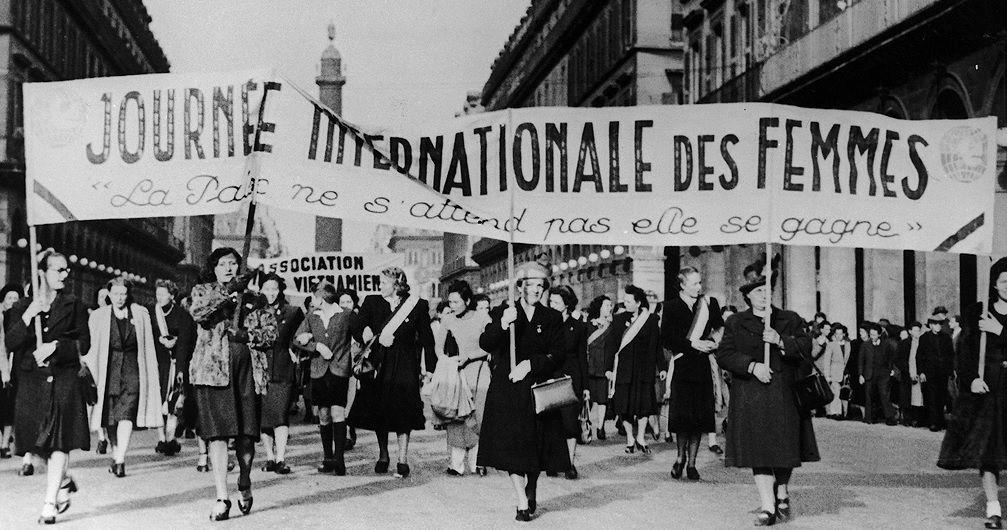
On the occasion of the 115th International Women’s Day last March 8th, millions of women took to the streets around the world, once again demonstrating their potential for mobilisation, struggle, and unity. Looking ahead to May 1st, for the 137th International Workers’ Day, left-wing movements will mobilise again, and women will occupy a central place in the organisation of actions and demonstrations. However, for a global women’s liberation movement to effectively emerge in the 21st century and become an organisational force for women’s revolution, a new step must be taken. From this perspective, the historical experiences of women’s struggles constitute an essential legacy for advancing the project of a global democratic confederalism of women. It therefore seems necessary to assess the pioneering role played by women in building and defending socialist and internationalist values. Through this article, we wish to highlight the historical struggles of socialist women at the international level, and reflect on the prospects of extending their political project in the construction of democratic socialism.
Flora Tristan and the Workers’ Union
While the struggle against the capitalist system had been developing internationally since the 19th century, socialist women affirmed that the liberation of women was an indispensable condition for the emancipation of society as a whole. They argued that without the emancipation of women, the building of solidarity among peoples and nations — necessary for the freedom of humanity — could not be fully realised.
 In her work, Flora Tristan also affirms that the existence of a society composed of free women and men — what we might today qualify as free coexistence — presupposes, above all, the emancipation of “women of the people.” According to her, this emancipation necessarily passes through access to “moral, intellectual, and professional education.” She emphasises that women play a central role in the transmission of moral values within society. As “mothers,” “friends,” “associates,” or “companions,” they exert a decisive influence on both children and men, thus participating in their education. The emancipation and education of women therefore appear as an essential condition for transforming society as a whole.
Flora Tristan also defends the idea of a workers’ union founded on the recognition and defence of the diversity of individuals and nations. In this perspective, she develops a deeply internationalist conception of humanity, which she compares to a great living body. According to her, the world must be understood as a “great humanitarian body” in which the various nations represent the organs and limbs, while individuals constitute its arteries, veins, nerves, and fibres. Through this metaphor, Flora Tristan emphasises the fundamental interdependence between peoples and individuals; as in the human body, no part can suffer without the whole body being affected. The suffering of an individual or a people thus concerns all of humanity. She argues that this idea of the indivisibility of the humanitarian body and solidarity among nations and individuals should be transmitted from childhood through education, and she attributes responsibility for the failure to integrate these concepts into teaching to the religious and political views that have historically contributed to dividing nations and individuals.
Flora Tristan travelled across France to promote the Workers’ Union project and defend the necessity of organising the proletarian class at the international level. Her life was marked by great suffering, particularly linked to her marriage, and she died in 1844 from an illness aggravated by the violence she suffered at her husband’s hands. Despite her premature death, her ideas exerted a significant influence on socialist movements, and in 1864 the first international workers’ organisation was founded in London. This organisation, later known as the International Workingmen’s Association (IWA) — or First International — set itself the goal of building a global workers’ movement against the capitalist system, founded on international solidarity and class struggle.
Clara Zetkin and the Socialist Women’s International
Clara Zetkin also played a fundamental role in the international organisation of socialist movements, both in general terms, and in the specific organisation of women. A member of the Social Democratic Party of Germany (SPD), she quickly clashed with the party’s initial positions, which were then strongly marked by sexist conceptions. The SPD held that women should not become labour subordinated to capitalism and that they should remain in the home. At the time, the dominant view within the labour movement was to defend the idea that the socialist struggle should guarantee men a wage sufficient to support the entire family, so that women would not have to work outside the home. Clara Zetkin opposed this conception. She consistently defended women’s right to financial autonomy and access to work outside the home, considering these demands as an integral part of social emancipation. She thus actively engaged to have these principles recognised and applied.
At the time, it was frequently argued that women working outside the home would reduce employment opportunities for men. In reality, since their wages were significantly lower than men’s, cheap female labour represented an advantage for factory owners within the framework of capitalist exploitation. Faced with this situation, socialist women sought to convince their male comrades that the problem lay not in women’s work as such, but in the inequality between men and women, as well as in the capitalist and sexist logics of the bourgeoisie. For them, the class struggle remained the fundamental struggle, while the struggle between the sexes was inscribed within it. However, given the specific condition of women under the capitalist system, they considered it necessary to develop a women’s organisation within the general organisation of the party and the Socialist International. This orientation encountered significant obstacles. In Germany, for example, the law then prohibited women from creating or joining political organisations. Moreover, within some socialist movements — such as the Belgian Labour Party — the necessity of a specific women’s organisation was not recognised.
At the time, women conducted their struggle for gender equality on two fronts: on the one hand, they denounced the sexist character of state institutions; on the other, they strove to convince their male comrades that the emancipation of women was an essential question of socialism. Within socialist movements, they did not limit themselves to joining a party or political organisation, but also demanded legal equality between men and women and sought to promote this equality in the economic sphere, as well as in all aspects of social life.
It was in this context that the Socialist Women’s International was founded. The first conference of socialist women was held in 1907 in Stuttgart, Germany, bringing together 59 delegates representing 15 nationalities. Further conferences were then organised in 1910, 1915, and 1917, thereby consolidating the international coordination of socialist women militants.
The main objectives of these conferences were to promote gender equality, to fight against all forms of discrimination against women, and to defend their rights as fundamental human rights. They also aimed to strengthen ties between member organisations, to ensure the implementation of adopted resolutions, to develop relations with other groups of socialist women, and to promote programmes of action for the emancipation of women and girls, while simultaneously working for development, peace, and human rights as a whole. Among the resolutions adopted, it was affirmed that socialist parties should defend women’s right to vote, inscribed within the framework of universal suffrage — since at the time the right to vote was reserved for male property owners. Bourgeois women who claimed suffrage for themselves without defending class equality and universal suffrage were criticised by socialist women, as their approach contributed to reinforcing the capitalist system. Furthermore, the complete emancipation of women required their economic and political liberation, as well as active engagement in favour of the women’s trade union and cooperative movement, while simultaneously raising workers’ awareness of the importance of unity in achieving the socialist ideal. Socialist women militants also emphasised that the interests of peoples were common, and that it was essential to promote antimilitarist sentiments and international fraternity. Finally, they called for the implementation of an economic aid system for destitute mothers at the time of childbirth, and continuous support for mothers with dependent children, so that they could raise their children without having to resort to paid labour.
Thanks to her determination and vision in the struggle for gender and class equality, Clara Zetkin was elected Secretary General of the Socialist Women’s International and editor-in-chief of its newspaper. At the second conference held in Copenhagen in 1910, she delivered the historic declaration proclaiming the creation of an international day of women’s struggle, which was set on March 8th. For Clara Zetkin, women could become the spark of revolution — and indeed they were. In Russia, on March 8th, 1917, the revolution began with a strike by women workers.* Similarly, during the uprisings of the Spartacist League in Germany at the beginning of the 20th century, history shows that, thanks to the international organisation of socialist women, women played a leading role in the revolutionary vanguard.
In the experience of real socialism, women occupied a prominent place and achieved significant gains at the beginning of the revolution. In Russia, Alexandra Kollontaï was one of those militants who also opposed the betrayal of the Soviet revolution. Indeed, the revolutionary government, founded on a dominant male ideology and a statist and bureaucratic system, acted as a centralised and counter-revolutionary authority, slowing progress and the emancipation of women while simultaneously opposing libertarian movements.
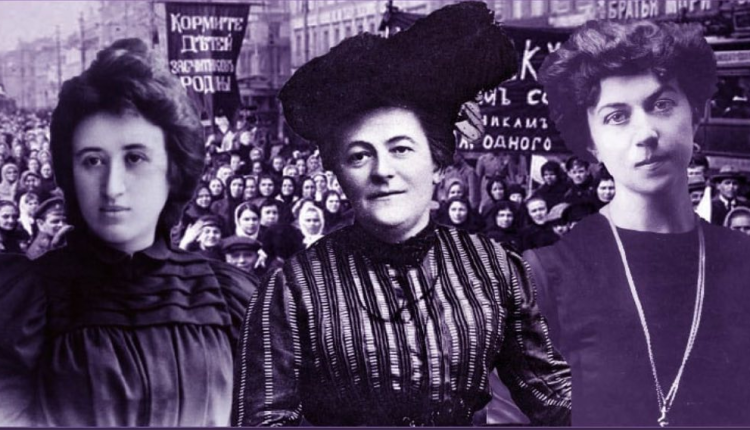
At the time of the First World War, thanks to their political consciousness and their radical stance against war, nationalism, and imperialism, socialist women like Rosa Luxemburg waged a historic struggle. The state authorities then sought to fragment and weaken the international labour movement. The nationalist position adopted by many socialist parties, such as the SPD in Germany, in the face of the emerging conflict shook the internationalist consciousness that had been built over the preceding years. In this context, various parties attempted to forbid their women militants from attending the third international women’s conference. These women ignored the ban and held their conference in 1915. The militants of the Socialist Women’s International positioned themselves as the representatives of morality and peace. In Germany, Rosa Luxemburg and Clara Zetkin defended the internationalist line for women and peoples, both playing a leading role in the founding of the German Communist Party, in opposition to the hypocritical attitude of the SPD.
Feminism and Internationalism
Bourgeois feminist movements organised themselves before the birth of socialist women’s organisations. However, they were criticised for having limited themselves to the sole struggle between the sexes. Flora Tristan already considered the condition of women as a complex problem that could not be resolved simply through access to university or participation in elections. Socialist women thus perceived these movements as a continuation of the dominant system and as an instrument for legitimising liberalism.
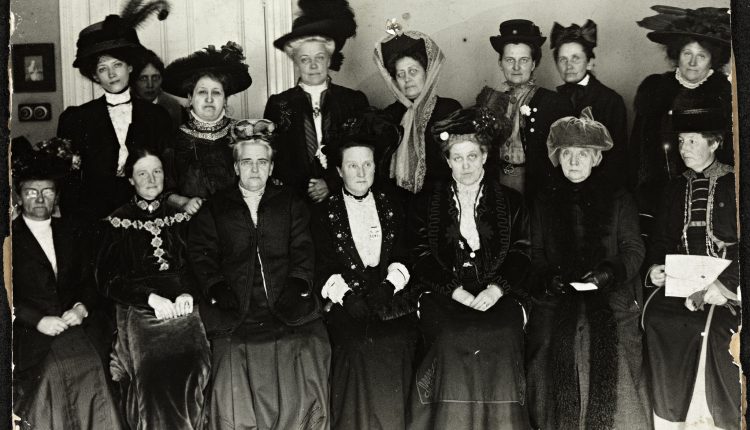
Nonetheless, after the Second World War, many women engaged in socialist movements, national liberation movements, and anti-racism movements began defining themselves as “feminists,” emphasising that without the struggle for the liberation of peoples and classes, the liberation of women could not be fully realised. However, due to their inability to resolve ideological contradictions, feminist movements have not managed, to this day, to constitute a significant force capable of founding an international women’s organisation that can effectively confront the capitalist system.
Beyond feminism, throughout the history of internationalism, ideological divergences between different movements have always been a source of division. In the early days of the labour movements, from Marxist organisations to Proudhonists, from mutualists to collectivists, from utopian socialists to republicans, all had adhered to the First International. However, after the defeat of the Paris Commune, new revolutionary strategies emerged, accentuating the conflicts between Marxists and anarchists. The Marxists, seeking to seize state power, attempted to build an international organisation and political parties founded on a centralised system and a single strategy. Bakunin and the anarchists, on the contrary, considered this approach as authoritarian centralism and called for the creation of an international organisation based on a system bringing together federations of workers.
Due to these disagreements, the First International failed to achieve its objectives, and the Marxist and anarchist movements, as well as the women who were part of them, remained divided thereafter. Between 1872 and 1877, there was an attempt to create the Anti-Authoritarian International. In 1923, a new International Workers’ Association (IWA) was also founded, under the impetus of the Spanish anarcho-syndicalist movement. However, the anarchist movements were unable to withstand the attacks and repression carried out by fascist forces, capitalist states, and the USSR. After the Second World War, most of these movements were annihilated or considerably weakened by the executions and exile of their principal militants. The same fate befell women’s federal organisations, such as Mujeres Libres in Spain.
Furthermore, in 1889, the Second International was founded on a Marxist line, under the name of the “Workers’ International.” After the First World War, the labour movement split into two camps: the reformist social democrats and the revolutionary communists. The nationalist positions adopted by social democratic parties opposed the internationalist revolutionary line. In 1919, following the Russian revolution, the Third International was created under the name of the “Communist International.” However, new internal disagreements, opposed to the lines of Stalin and Trotsky, provoked a new split. Subsequently, Trotskyist organisations attempted to promote a Fourth International, but without real success, due to persistent organisational difficulties.
Due to these ideological disagreements and despite their initiatives, socialist (revolutionary) women — who were waging a common struggle against gender and class inequalities — were unable to unite and constitute a force capable of overcoming the statist, capitalist, and sexist system, a necessary condition for the success of a democratic socialist revolution.
Towards a Global Democratic Confederalism of Women
In the 21st century, in order to advance the project of a global democratic confederalism of women and a new International, it is necessary to study and carefully evaluate the historical experiences of the struggles mentioned in this article, as well as their shortcomings. In the face of the capitalist, nationalist, racist, and sexist system, the efforts of the Socialist Women’s International and other international socialist organisations constituted important milestones, but remained insufficient. To complete this study, we can highlight some important points drawing from the perspectives of the Free Women’s Movement of Kurdistan.
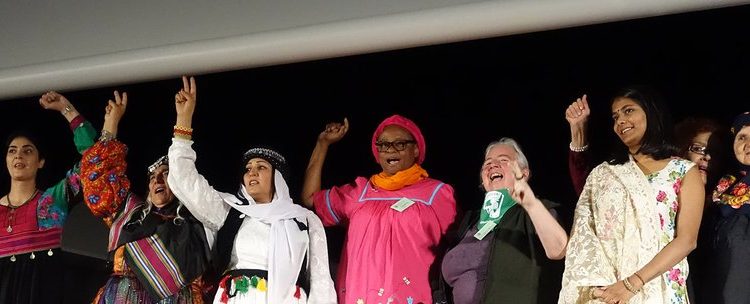
First and foremost, the unity of the gender struggle, the class struggle and the national liberation struggle, constitutes the very unity of the liberation struggle. The union, solidarity and organisation of women at the global level can only be built on the basis of a gender consciousness and struggle. In this regard, initiatives such as the creation of the Syrian Women’s Council, or the organisation of international women’s conferences (promoted by the NADA organisation in the Middle East and the Women Weaving the Future network in Europe and Abya Yala), aimed at establishing lasting coordination programmes and mechanisms, represent significant experiences.
Based on the principles of democratic socialism and the democratic nation, as well as the lessons drawn from opposition to the dominant male mentality, the nation-state, and centralised administration, the construction of an autonomous organisation appears indispensable for advancing women’s liberation. In this perspective, a confederal (decentralised) system of women, ranging from the local to the global level, constitutes a privileged organisational form, of which the experience of the confederation of the Kurdistan Women’s Communities (KJK) represents a fundamental reference.
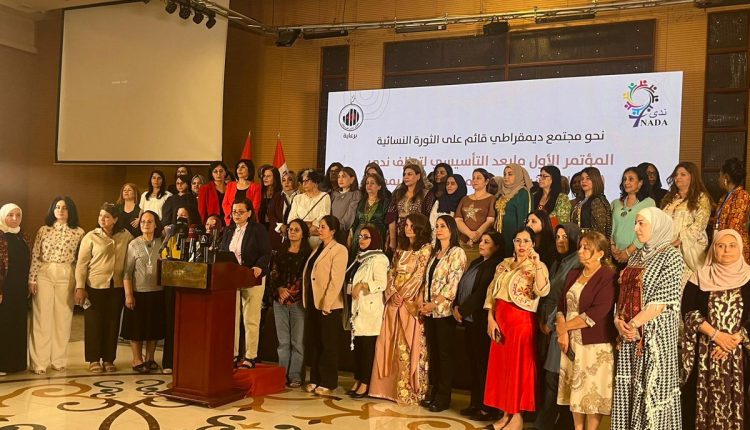
Women must also continue to play a pioneering role in building the general system of democratic autonomy of peoples, defending a radical ideological line by constituting themselves as a force for peace and self-defence. In this regard, the co-presidency system developed within the Kurdistan Liberation Movement has enabled significant advances in the representation and participation of women within general organisations.
Furthermore, the establishment of common libertarian principles is necessary to overcome both the influence of liberalism and dogmatic approaches. Through jineolojî, founded on analysis of the dominant system and on collective political, ideological and scientific discussions, contradictions between the different perspectives of women can be overcome and, in this way, the principles of a global women’s organisation can be defined. Within this framework, the “women’s social contract” model developed in Kurdistan can also serve as an international reference for an organisation capable of shaping a moral and political society.
The development of an organised global women’s system also requires the formation of a militant personality. The experience of the Kurdistan Women’s Freedom Party (PAJK), particularly through the theory of separation and the principles of the women’s liberation ideology, offers important perspectives for strengthening the capacity for action of women’s movements around the world.
Finally, in the face of the dominant male mentality and its attacks, the implementation of an autonomous education system, associated with a project of men’s transformation and free coexistence, constitutes an essential condition for building free personalities of socialist women and men.
Conclusion
From the second half of the 19th century, the notions of feminism and internationalism gave rise to an intense debate within society. However, many women’s movements around the world have experienced fragmentation and failed to achieve their objectives. In the 21st century, the perspectives of jineolojî and the democratic nation, arising from the revolution in Kurdistan, have rekindled hope for many women and freedom movements. From this search for freedom and the actions accompanying it in the four corners of the world, new opportunities for common struggle and organisation are emerging within the framework of democratic confederalism, opening the way to a global women’s revolution.
* Known as the “February Revolution,” this event, which took place on February 27, 1917 in Russia, corresponds to March 8, 1917 in the Gregorian calendar.
Useful links
https://www.newayajin.net/jin-nirxen-enternasyonalist-pes-dixin/
https://www.newayajin.net/ciruska-agire-sorese/
To learn more about the historical, theoretical and organisational foundations of the Free Women’s Movement of Kurdistan:
Article: “Guerilla Goddesses” https://jineoloji.eu/en/2020/06/13/guerrilla-goddesses/
To learn more about the organisations mentioned:
– KJK: https://www.kjkonline.net/en/
– Syrian Women’s Council: https://kongra-star.org/eng/2024/12/21/declaration-of-syrian-womens-counsel/
– Women Weaving the Future Network: https://womenweavingfuture.org/
– NADA (Regional Democratic Coalition of Women of the Middle East and North Africa): https://womendefendrojava.net/en/2025/05/20/final-declaration-of-nada-regional-democratic-womens-coalition-in-the-middle-east-and-north-africa-congress/