

Jineolojî Workshops: Changing Mindsets – Part 2
In a dark period when knowledge was forbidden to women, women who gathered sometimes in a home, sometimes in a neighborhood, multiply and organize through Jineolojî workshops.
ARJİN DİLEK ÖNCEL Amed – Women have embarked on a long-term journey with Jineolojî. While the main areas of focus for Jineolojî include topics such as freedom, male-female relationships, masculinity, sociality, coexistence, ethics-aesthetics, politics, economy, demography, history, and women’s revolution, all these subjects center on the enlightenment of women’s nature and aim to reveal the “social essence.” Jineolojî draws attention to alternatives against a system that seeks to be created through the state system, power, male-dominated governance, mythology, philosophy, religion and sexism.
Jineolojî examines women and society within the triangle of male-state-power, alongside self-knowledge, understanding, and giving meaning to life. It illuminates a dark history where women, along with men who are trapped within this triangle, are enslaved. Jineolojî claims to lead in shaping all sciences, especially the social sciences.
Jineolojî Workshops
With the use of the concept of Jineolojî and its discussion as a “women’s science,” workshops became one of the most effective efforts to disseminate this science. In a process where knowledge, discussion, research—in short, truth—is being torn away from women, workshops become areas of freedom for women.
The “Women’s Academy Jineolojî Workshop” established in Amed, became a beginning for Jineolojî workshops. Jineolojî, which examines, questions, and reinterprets all sciences from nature to society; from mythology to religions; to science from a women’s perspective; enables the deepening and spreading of these discussions through workshops.
Women are not the only ones at the center of the change and transformation that Jineolojî struggles for. Because the capitalist, patriarchal system doesn’t only steal women’s freedoms; it tries to establish dominance over society as a whole. In this society, while men are used as a force and tool of oppression against women on one hand, they are also made slaves of the system on the other. The path for men’s liberation within this existing system, and their freedom from what the system imposes on them, passes through Jineolojî.
Women’s Academy member Figen Aras provided evaluations about the past and present of Jineolojî workshops for the second part of our dossier.
Expressing that as women, they felt great excitement with the discussion of the concept of Jineolojî, but they didn’t have enough knowledge to discuss this concept, Figen Aras stated that they first came together in the Women’s Academy and women’s associations in the early 2010’s.
‘Magazines and Books Contributed to Workshops’
Figen Aras explained how the accumulation of knowledge about Jineolojî was formed:
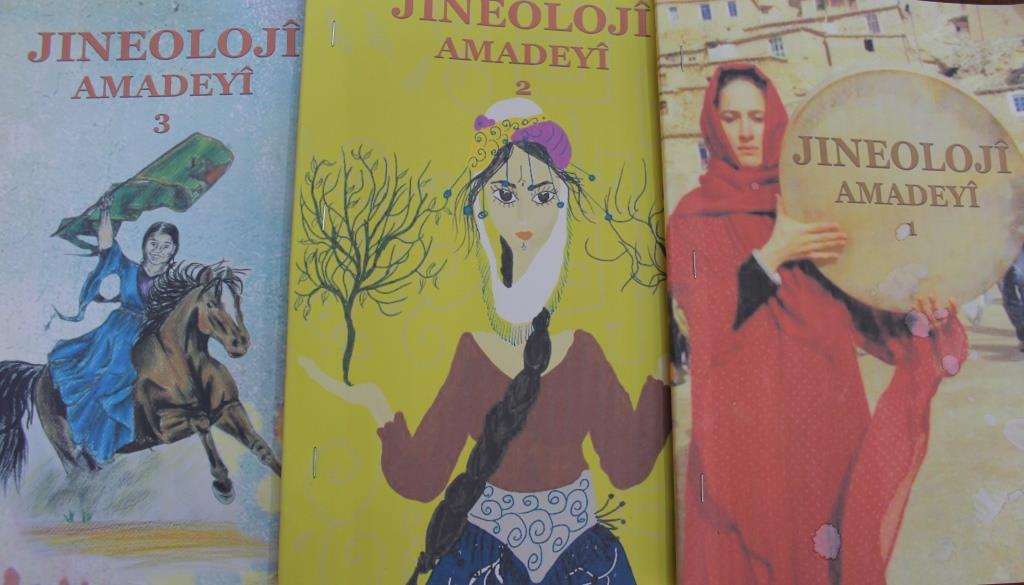
“However, what we did and discussed seemed like a repetition of what had been done much earlier. We had encountered women’s liberation ideology; we already had readings and discussions in areas like ‘endless divorce,’ ‘democratic family,’ and how women were addressed in history. As discussions about Jineolojî developed, we gradually realized that the method of making sense of life and interpreting it needed to be discussed. At thisstage, Jineolojî Magazine was published. The Jineolojî book, prepared by 17 political women prisoners in various prisons, was published. The Jineolojî Introduction book was also printed. The method in this book and the way topics were addressed was effective for workshops to sustain themselves. Finally, the Jineolojî Lecture Notes book was published. The method in this book also contributed to discussions in workshops.”
‘Knowing Oneself, Making Sense of Life Was Very Precious’
Stating that she was one of the first women to participate in Jineolojî workshops, Figen Aras expressed her first experience with these words: “The point that excited me most was finding oneself, knowing oneself. Yes, there was a certain experience, a certain theory; of course, we were all organized, we all took part in the women’s struggle, but Jineolojî had a more magical side. We couldn’t solve that magic. Who am I? How should existence itself be defined? Of course, the Kurdish women’s movement has been struggling for nearly 30 years. Since we’re talking about 15 years ago, the women’s movement had a literature at that time. The method issue of Jineolojî led us toward clarification in workshops. The point that excited us most in the formation of workshops in Jineolojî discussions was that the world of knowledge and knowing wasn’t something to be feared, difficult, or unreachable. Knowing oneself, making sense of life was very precious. Women doing this together, giving strength to each other, realizing that solidarity was very precious.”
‘Workshops Brought Women’s Organization Along’
Expressing that in the 1960s, women in Europe and America gathered in homes under the umbrella of feminist movements and shared their experiences, Figen Aras said that in Jineolojî workshops, women’s state of being subjects was discussed. She stated, “In Jineolojî workshops, rather than lamenting and discussing women’s objectification dimension, we began to talk about our state of being subjects and to love ourselves. Of course, when a person begins to love themselves, they want all women to see themselves as valuable, and this brought organization along. We wanted to open workshops in more places, to spread these workshops. Because the existing workshops were no longer sufficient.”
‘Jineolojî Covers All Areas of Life’
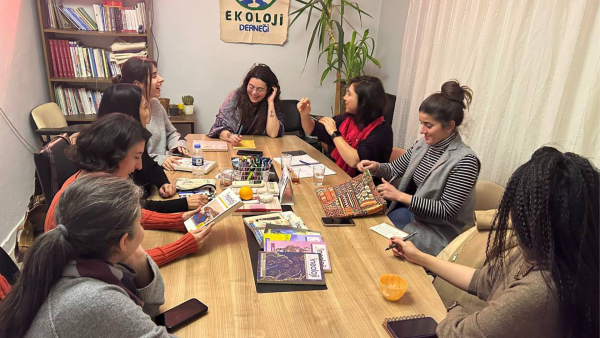
Noting that there was no logic of taking or giving lessons in Jineolojî workshops, Figen Aras said, “We realized this in the workshop: Jineolojî is not just a women’s science by itself; beyond being a women’s science that researches women’s own history, names it, and plans their future, it is a social science proposal for life. This made us very determined in new period planning and gave strength to our decisions. The workshop is not just a place to be viewed with a lesson mentality; it also means women’s comradeship. In short, Jineolojî covers all areas of life.”
‘Equality with the Current Male Is Not Desired’
Also speaking about mixed workshops that include men, Figen Aras stated that the measures of the concept of “equality” were rediscussed in these workshops, and continued: “As women, we are very careful in knowing ourselves, addressing our existence comprehensively, and revealing our own knowledge structure. Why? Because in our meetings and workshops with men, we saw that the contradictions in the gears of that system’s knowledge structuring were still in place. Those contradictions weren’t going anywhere.
Women are not the only ones at the center of the change and transformation that Jineolojî struggles for. Because the capitalist, patriarchal system doesn’t only steal women’s freedoms; it tries to establish dominance over society as a whole. In this society, while men are used as a force and tool of oppression against women on one hand, they are also made slaves of the system on the other. The path for men’s liberation within this existing system, and their freedom from what the system imposes on them, passes through Jineolojî.
Therefore, it’s very important for a person to know themselves first. The men participating in workshops have a certain level in theory, especially men who have taken part in this tradition and have a certain theoretical level. Yes, we are all colonized by the system, our labor is exploited, our Kurdish existence itself has paid many prices until today, but when we come to the dimension of male-female relationships, the colonized man still dominates and creates power over the colonized woman. Revealing this was very precious, but setting our measures was also important. When we came together with men, we saw that equality wasn’t very possible. So we said, ‘equality with this current male is not desired.’ Because this shouldn’t be our measure. The man goes to work, so I should go to work too. The man can go out, so I should be able to go out too, wear what I want. These weren’t the issues; realizing that the issue itself was women’s freedom along with social freedom was very precious.”
The Need to Change and Transform Men
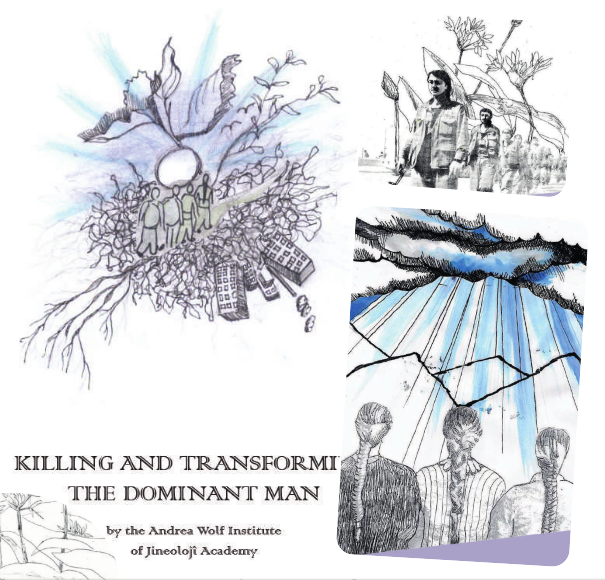
Expressing that the need to change and transform masculinity thus emerged, Figen Aras said, “Men were also open to this because there’s a tradition, a cultural accumulation, a historical experience. But in return, there’s also a construction of masculinity brought by thousands of years, coded roles. Overcoming this, breaking it, giving up that comfort seemed quite difficult for them. But we began to live through intense discussions that this wasn’t difficult at all, that life could only become beautiful this way. Without women’s liberation, the change and transformation of masculinity doesn’t happen, and social freedom isn’t realized either. Therefore, we focused more on women-specific workshops. But recently, there’s a very intense demand from men to participate in workshops.”
Jineolojî Workshops from the First Years to Today
Explaining that many changes have been experienced from the first years of Jineolojî discussions to today, she said, “In the first years, there was a perception that ‘women don’t take part in science, women can’t produce knowledge.’ It was said, ‘In the midst of this war and poverty, are we going to deal with science?’ Therefore, in these periods, many women friends who said ‘I don’t have time; I don’t have the means; I never studied; I don’t know epistemology; I don’t know etymology; I never encountered philosophy’, today saw that those fields and discussions weren’t difficult at all. They realized that what was really difficult was the understanding that male-dominated mentality imposed on women.”
‘We Pursued Alternative Knowledge Production’
Saying “The issue isn’t taking knowledge as it is, the issue is extracting knowledge from within life,” Figen Aras touched on the importance and characteristics of knowledge that exists in women. She stated, “We realized that our mothers were philosophers, that our mothers were still healers. Yes, the system produces knowledge and we are affected by that knowledge. In workshops, an answer is sought to the question: How should alternative knowledge production be? Or is it producing knowledge, or revealing, sharing, and making common the knowledge of life? Thus, practical work was also undertaken. Readings and discussions were made, but at the same time, women went to collect herbs with mothers in Van, mothers explained the herbs. Or in Istanbul’s Yoğurtçu Park, mothers told Kurdish stories and Kurdish tales. The current system says written history is important, but our history is also shaped through oral tradition.”
‘While Jineolojî Was Researching and Examining History, It Was Also Making History’
Expressing that women who revealed their consciousness from yesterday to today achieved great gains in leading, expanding freedom, and elevating struggle, Figen Aras said, “Revealing existing knowledge was very precious. But what should be put in its place? What should the alternative be? We were seeking answers to these questions. In the beginning, rather than doing very concrete things, we tried to pursue knowledge on questions like: What is Jineolojî? What is woman? How is women’s history addressed? What was woman in the Paleolithic period? What were witch hunts? But now we want to concretize, archive, and make history of the work being done. We realized this: while Jineolojî was researching and examining history, it was also making history. Maybe 50 years from now, children in Kurdistan will say, ‘At this time in history, women revealed knowledge here, they kept our culture alive.'”
She continued: “In this process, we realized this: we shouldn’t move away from our roots, we should return to our roots. We can be very much under the influence of Western-centered knowledge. Of course, there are valuable aspects, but we women who were born and raised in the geography of Kurdistan should keep our own history alive. From yesterday to today, Jineolojî is giving birth; this is like a social birth, it’s not content with itself, it wants to multiply. Of course, the work done in the face of these tremendous values is not sufficient. This is a beginning; if many women are still demanding new workshops, it means we’re on a good path.”
‘It’s Necessary to Respond to the Democratic Society Call’
Also drawing attention to Kurdish People’s Leader Abdullah Öcalan’s “Peace and Democratic Society” call on February 27, Figen Aras said, “It’s necessary to respond to this call. We should focus on how we should position ourselves in the new process, what we can contribute to this process. Jineolojî is a scientific proposal, but it’s not independent from politics and ecology. We believe that Jineolojî will continue itself in the construction of new social life by spreading much more, growing much more, becoming more concrete.”