
Life in the Era of Colonialism
From the Colonialism Issue — Jineoloji Magazine, Issue 25
Rozan Star
How and why did the idea of colonialism develop? What led to this thinking, and what were its consequences? Above all, how did this thinking come to be conceived? Without doubt, these are questions that must be answered in order to understand and change the world in which we live. When we observe human history, we witness very powerful struggles for freedom and democracy, alongside terrible colonial wars. The ambition for power that arises in human beings has influenced social life, from past to present. Especially with the development of overproduction, this ambition has also eroded the morality that forms society, and the result has been the exploitation of some people by others.
Colonialism as a system (colonialism or imperialism) began with the forcible appropriation of social production by others, and the exploitation of labour power for the benefit of colonial powers. The earliest forms of colonialism were carried out for purposes such as the expansion of Empires, the idea of finding new places for the growing population, the need for free labour, the resolution of the raw materials problem in the centres of capitalist modernity, the conquest of geographically and geopolitically important areas, and the attempt to spread to a particular religion. Since colonised areas could not be inhabited solely on the basis of labour exploitation and resource appropriation, the objective of colonialism was soon expanded. The colonialists aimed to expand by subjugating the culture, beliefs and history of the peoples they invaded to domination and submission, usurping their will and making them economically and politically dependent. In exploiting peoples, communities, nations and states, the colonialists aimed to alienate them intellectually and culturally from their own identity and values in order to integrate them into the dominant system. Making them strangers to their own language and culture, and thus more functional to domination, constituted the guarantee of this expansion.
We can consider that colonialism arrives together with the formation of the idea of domination — that is, of dominance — and with the process of its institutionalisation as a state. As is known, the phenomenon of the state began to develop with the colonisation of women and the usurpation of the values they developed. Therefore, the stem cell of colonialism is formed by patriarchal mentality. The beginning of one gender establishing hegemony over another gender also means the exploitation of the values it creates. This system of exploitation, exactly like colonialism, creates a reality in which existing social structures are shaped according to the desires of hegemonic power. Domination, sovereignty, property and power cannot develop without colonisation. As Mehmet Hayri Durmuş expresses in his work ‘History of Kurdistan’, we see the first systematic colonisation in the figure of Sargon. Sargon, the Akkadian emperor, began the phase of the colonial state by subjugating the Sumerian city-states one by one. Abdullah Öcalan, in his ECHR defences, transmits the politics of that period as follows: “Planned violence to kill people, take everything they have, enslave them, colonise the places they find advantageous and keep them as a governing power dependent on themselves. Furthermore, this means that colonialism, in the classical sense of colonisation, has a cursed history extending from around 2000 BC to the present. Oppression, alienation and exploitation were experienced as intertwined in the colonies.” In other words, domination, expansion and colonisation developed and systematised themselves by intertwining.
The colonial system needs to expand in order to be permanent, because the essence of this system is based on creating itself through the labour of others. More expansion means being able to seize more labour. Therefore, colonialism and imperialism developed in connection with each other. Imperialism is defined as the desire of a state to expand and dominate other states. The term imperialism, derived from the Latin term ‘Imperium’ meaning empire, was first used in English in the year 1880, and referred to the doctrine of supporters of the Imperial regime. The origin of the word is the word Per, which means to obtain in the Proto-Indo-European language. Although the word was used in the eighteen hundreds, we can trace this process back to the Sumerians. In the history of hegemonic civilisation, expansionist character has manifested itself in the development of all states and empires. The civilising powers adopted a recurring method – first deceive, then intimidate, and finally crush like a steamroller once domination has been achieved. Displacing people from their places, forcibly enslaving them, and making them work in different lands is one of the oldest colonising practices. Transporting people to exploited lands has been a frequently applied method. Controlling the native peoples of exploited lands through coercion and appointing different administrators from among them is a method that is still applied today. The forced mixing of indigenous populations with groups transferred from other territories to create hybrid societies was another widely applied colonial strategy. As can be deduced over the course of history, the methods have changed, but the purposes are the same.
Colonialism emerged in Europe more intensively and systematically towards the end of the fifteenth century. The discovery of new maritime routes and the invention of the compass had a significant impact on travel to different continents. Colonial activities during this period were very painful, tragic and bloody. Colonialism in this time was carried out through slavery, advanced weapons and Christianity. The countries of Western Europe, principally the British, French, Spanish and Portuguese Empires, inflicted terrible suffering on the societies they colonised and on the people they enslaved in South America, North America, Africa, Asia and Australia. For example, between 1486 and 1641, 1,389,000 people were brought from Angola to America as slaves. Millions of people became victims of the policy of colonialism, which captured people, enslaved them and made them work. In addition to those who died during the journey, the people transported to America were subjected to deplorable tortures. The peoples who were able to remain in their own lands had to face all kinds of violence from the colonialist powers, until they reached the point of not being able to claim any right to exist there. They had to work to meet the needs of the colonialists, and this torture was not formed only through labour. The cultures and ways of life of the exploited communities were humiliated, with terrifying policies implemented to make them ashamed of themselves and to bring them to obey endlessly. With this, in colonial countries such as in America and Europe, colonised people were exhibited in cages. This barbarity, which they called the human zoo, continued until 1958, and we mention this to show the different dimensions of colonialism. Today, although slavery is officially prohibited, in countries like Mauritania it continues to be practised. Today in the world, buying and selling slaves is no longer tolerated, but the continuation of that type of mentality is not recognised and is not seen as a contradiction.
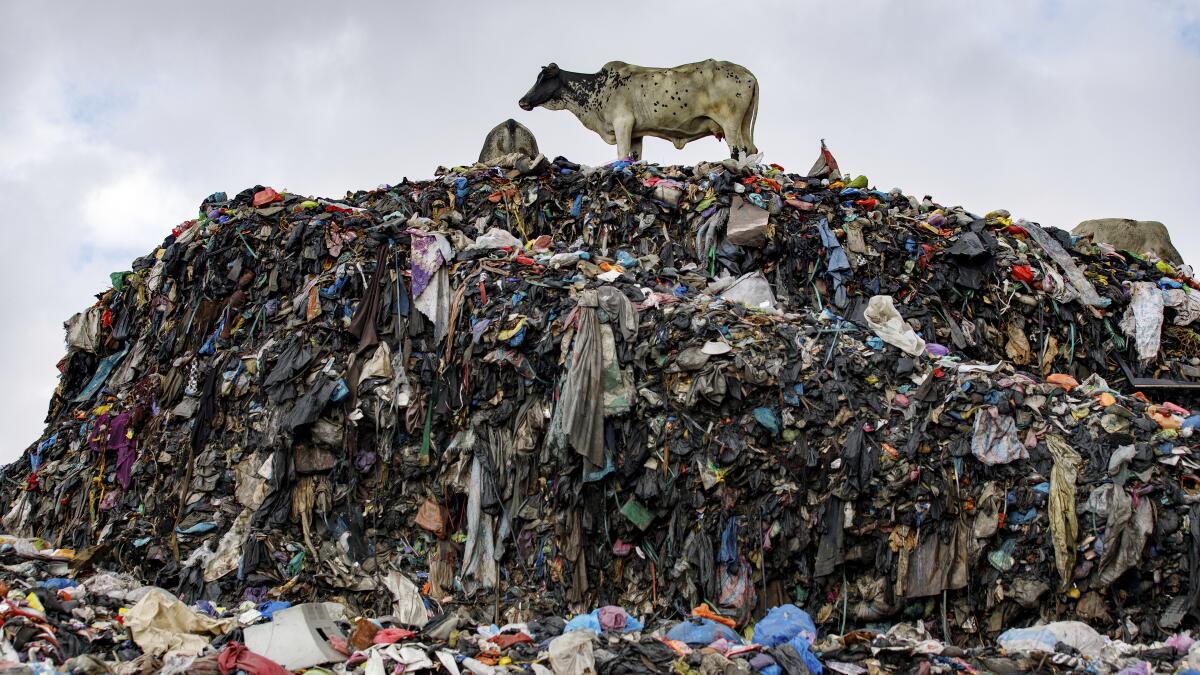
In these processes, the territory, with the people living on it, its underground and above-ground riches, its nature and its animals, was subjected to terrible exploitation and large scale massacres were carried out. People and other living beings were literally used as tools, commodities and transformed into carcasses. Their souls were wounded. Native Americans are almost non-existent today. The Aboriginal people, the natives of Australia, are struggling to survive in forest areas. Also, many animal species have gone extinct or are facing extinction due to hunting and the destruction of nature. Nature has been subjected to a process of industrialisation and exploitation for the sake of the law of maximum profit. The production of goods in excess of what is necessary, aimed at maximum profit, and the productive logic entirely subordinated to gain, have today altered the natural balance through environmental destruction, inevitably also reflected in human relations and ways of life. The incessant production, and the obsession with maximum profit have reduced people to robots – tireless ants devoid of autonomy. In conclusion, it appears evident that colonialism constituted the structural and ideological foundation upon which capitalist modernity was built.
To understand this foundation, it is necessary to correctly analyse mental hegemony, the colonisation of thought, and the process of becoming a “colonised being”. Thought is a wonderful blessing for people; it helps us to understand and interpret the world. In a certain sense, thought has a quite flexible structure. For a thought to develop and spread, the main factors are that the foundation is solid, that there is good organisation, and that opportunities are taken when they arise. This situation maintains its validity both for positive thoughts (linked to the good and the beautiful), and for negative thoughts (linked to ugliness and wickedness), so much so that the power of new ideas can influence people’s feelings, spirits and thoughts, and become coercive power. This is what influences, directs, regulates, disturbs and disperses social life, and at the same time directs the flow of history. The capacity for positive thinking in human beings has led to understanding, interpreting and creating culture in the world, while negative thinking has turned towards establishing domination over the earth. Colonialism has also developed as a result of these negative thoughts. This statement can also be found in human reality. That is, both good and evil potentially exist in human beings; the part that is nourished the most, flourishes. This is why colonialism has been a phenomenon developed especially in mentality.
This system cannot be realised without making a distinction between ‘us and the other’. When a hierarchical relationship of alienation is established between us and the other, the other is positioned either as a subject of threat, or as an object in service to us. Therefore, when ‘we and the other’ develops as a conflictual relational basis, the foundation of exploitation is also laid. This distinction later became the source of nationalism and racism – ideologies of capitalist modernity. In these ideologies, the relationship with the other develops on the axis of national or racial interests, based on annihilation, humiliation or assimilation and colonisation. However, every society has its own differences and uniqueness, and these differences cannot be placed on a scale of superiority or inferiority. It is here that the thought of domination — forged by the colonial mentality, by a vision that recognises nothing above the human being except itself — arrogates to itself the right to subjugate and instrumentalise other societies and peoples. Attacks are organised against local populations by showing them as barbaric, reactionary, primitive, anachronistic, and themselves as civilised, modern, contemporary and progressive peoples. Even today, this idea of exporting civilisation by belittling other peoples as primitive is frequently used. As a result of these barbaric attacks, they have applied every type of destruction to the first and second nature. The mentality that looks at the other, and not at itself, as an insect to be eradicated, describes colonialism very well. Since everyone is seen as insects, the rulers have no problem rolling over them like a steamroller.
Let us think of a machine mechanism. If one part breaks, a new one is immediately added in its place; if it is not added, that machine does not work and it becomes dysfunctional. Colonialism is a system that resembles this mechanism. It did not happen by chance. As we stated above, colonialism does not develop only in a physical sense, but has also developed in emotions, thoughts and spirit. When domination, power and control settle in a person’s mind, social values, morality and conscience become something that must be overcome. For this reason it is indispensable for the colonial power to humiliate the colonised by alienating them — they must look at themselves through the eyes of the coloniser. For this reason, instilling fear in colonised societies, making them fear their own shadows, is indispensable for colonialism; making people feel inferior, small, simple, ordinary and insignificant is crucial for colonising societies and making the colonial system permanent. The large scale massacres, unimaginable tortures, exiles and slaveries experienced from past to present, can have no other reason for existing than to maintain a system of colonial domination. On this basis, we can say that the colonial system is the dark side of human history. When this dark side is understood and overcome, humanity will be able to come to light.
In the Middle East, which is an ancient centre of human history, expansionist Eurocentric colonialism arrived in 1880. The history of cultural resistance against this hegemonic civilisation is as deep as the civilisation itself, and it is precisely this depth that makes it possible to develop unique dynamics. For this reason, Eurocentric colonialism could not establish itself in the Middle East as it had established itself in other continents. Colonialism was mostly applied through mandatory regimes, forming a system that mixes classical colonialism with a new concept of colonialism. With the justification that the peoples here (in the Middle East) could not govern themselves, Western administrators were imposed on these countries; or collaborationist persons, educated in European schools, were appointed as administrators, without, however, managing to go beyond being a puppet regime.
In this way these lands were exploited, and the people were left in poverty. Today, this policy continues to exist, even if in different forms. Kurdistan, which is located at the centre of the Middle East, is exploited by four States (Iraq, Iran, Turkey and Syria). Within its territory, and amongst the people who live there, its underground and above-ground resources are destroyed for the sake of profit. Twelve thousand years of history are submerged and the people of the region are left to face war and destruction. Although Kurdistan is not defined as a colony by these states, a clear colonial law is applied. In the 1970s, this colonial system was analysed by Abdullah Öcalan, and the foundations of the struggle against this system, which established itself in Kurdistan both structurally and mentally, were laid. This struggle aimed not only at fighting the colonial powers, but also at destroying the idea of Kurdish existence that had been shaped by colonialism. This point is important because, in order to render the oppressive machine dysfunctional, the colonial personality must be destroyed. The first bullet should take aim not only at the colonial power, but also at the colonised personality.
Since colonialism can no longer be maintained in the classical sense of the term, today it has acquired a new dimension. Starting especially from the 1960s and 1970s, colonialism began to manifest itself in a new form – that of the creation of formally independent states in territories that had been colonised, whose “independence” nonetheless remained deeply conditioned by Western influence, and in particular by those same states that had colonised them. This type of “independence”, capitalism renewing itself as financial capital, and the development of globalisation, are some examples of how colonialism has transformed itself. Compared to the slavery of classical colonialism, more profitable methods are developed today. With the establishment of industry, the slave trade lost its function, and in its place modern slavery was imposed, founded on the sale of labour power. Invading a country and controlling it through multinational corporations and local collaborators — that is, without settling directly — proved to be a more economical and sustainable model for capitalist modernity. The essence of exploitation has not changed; only its form has changed.
We have stated that the first colonisation processes in history occurred together with imperialism, while new colonialism takes shape in conjuction with globalisation. Globalisation, which is the ideological form of colonialism in the new era, is an economic-political concept and has a multidimensional character that includes law. Exploitation continues through cultural and ideological expansionism, carried out in the name of the universality of concepts such as democracy, freedom and human rights. What was once called “savage and uncivilised” has now been replaced by the word “terrorists”. Hegemonic powers declare as terrorist the forces they perceive as a threat, inserting them into blacklists. It is the same mechanism that colonialists applied in the past by calling the peoples they wanted to subjugate “savages” and “barbarians”. Today, exploitation operates through the label of terrorism, applied to those who oppose being exploited.
We can also define this globalisation as a process of creating a global market, eliminating all economic barriers to allow the free circulation of capital, and integrating markets into single nation-states. The capitalist system exports its surplus production by opening new markets for itself, and it does so through globalisation. Now, transnational corporations that transcend states can direct the world as they wish. Instead of deported slaves being put to work, today people become like modern slaves who are required to work for a miserable salary, while the rulers enrich themselves by setting up companies in overpopulated and poor countries. When the colonisers have finished exploiting all natural and social resources and withdraw, what they leave behind are poverty, dependency, underdevelopment, degeneration, war, assimilation, disease, devastated lands and tragic stories. It is sufficient to look at the debt, the dependency, and the profound poverty in which the Global South — which represents the former colonies — is drowning, to realise this clearly.
Although today independence is formally spoken of, the lived reality tells quite another story. One cannot speak of true independence — neither in the political, nor in the economic, nor in the military field. Globalisation and the growing interdependence between countries make this evident. Epidemics like Covid-19 affect the entire world, and a war, wherever it breaks out, ends up concerning everyone.
Another evident problem is that the countries which were previously colonies of the West still live dependent upon the West, even if declared “independent”. This dependency continues in intellectual, spiritual and vital dimensions, and is ideologically fed by progressivism and modernism. Progressivism has globalised the distinction between us and “the other”. The way for “the other” to free themselves from their sense of inferiority is linked to their capacity to integrate into Western values. The effort of this “other” to free themselves from themselves, manifests through admiration for the West – being like “them”; appreciating and preferring “their” way of life; speaking “their” language; going to “their” schools; etc. Today, no matter where in the world, there are few people who do not admire the West or who do not see the West as progressive. To formally independent states, classified as developing or underdeveloped countries, ready-made recipes — both political and economic — are presented on what to do to attain the “developed” standard set by the West. It is through this mechanism that the West perpetuates and institutionalises its own hegemony – political, economic and cultural. The mechanism of global colonialism is operated through branding in the field of culture-art-thought, as well as through institutions such as the United Nations (UN), the World Health Organisation (WHO), the World Bank, the International Monetary Fund (IMF) and NATO.
This new system no longer forcibly transports people to make them slaves, but enslaves everyone in the place where they find themselves. Society as a whole is exploited because it is locked in an “iron cage”, through nation-states. A fierce colonial system has been built both inside and outside, eroding the capacity of the societies trapped in these iron cages to provide for their own existence. For this reason, on the one hand the nationalism of the nation-state is fuelled, and on the other, the dream of escape is fuelled through the discourse of global citizenship. Yet the borders, which disappear for capital, become deadly traps for people. Those who flee from these cages and pour into the centres of capitalist modernity, are sacrificed on the altar of a renewed nationalism as the new “other” of the global system.
New colonialism is organising itself in health, education, defence, economy, politics, media and all other areas of life. For the sake of maximum profit, even the most vital needs are commercialised, and life is turned to ruin. Reducing the economy to money and accumulating immense wealth through the exploitation of resources, both underground and above ground are turned to wastelands by human labour, and it seems that no more habitable places remain. It is no coincidence that, after having exhausted the planet’s resources, the richest people in the world have now launched themselves into the colonisation of Mars and the search for new living spaces elsewhere.
Another ideological tool upon which the new colonialism is based, is scientism. The plundering of the earth as a source of raw materials, the exploitation of human health as an experimental field and the colonisation of space, are justified in the name of progress, and presented as inevitable and necessary steps.
The lives of millions of living beings, including human beings, are sacrificed with biological and nuclear weapons tests. Just as with the massacre of people deported from Africa to America as slaves, these lives too are considered inevitable victims of progress. As we saw in the recent Covid-19 epidemic, community health is spent for the sake of maximum profit, such as letting the disease spread first and then producing drugs to counter it, while presenting the image of working to find a solution to save people.
Bio-power, as a new method of the new colonialism, has begun to influence life in a very dangerous way. Bio-power, that is the condition whereby the person internalises power within themselves and fulfils its demands, has reached a new phase with the spread of information technologies. The creation of virtual worlds has led people to disconnect from real life, pushing them to live in a simulacrum world — an appearance that is not real but is perceived as such. The development of artificial intelligence, and human and animal cloning, show the dangerous point to which scientism has arrived. Human memories are copied into artificial intelligence, and intervention in people’s memories is increasingly direct.
Another one of the ideological tools upon which the new colonialism is based is sexism. The male monopoly, established over women from past to present, continues its existence in the new colonial order. Women are used in a completely commodified way in support of the system, by bringing workers into the world and raising them; offering low-cost labour; driving down the market; being used in advertising; and much more. Still today, women’s labour is considered the cheapest — and even the most devoid of value — in the world. The Covid-19 pandemic made this even more evident as the first to be dismissed and to lose work were women, and the greatest burden of care work fell on them. It is no coincidence that the concept of the feminisation of labour is among the most discussed of this century. In the time in which we live, women are undergoing a ferocious colonisation, and find themselves in a total dead end — emotionally, mentally and spiritually.
From past to present very strong resistances have developed against the destruction waged by colonialism that we have just described. Thanks to these resistances, colonialism has been limited and, many times, the colonial powers have been defeated. The rebellion against colonialism has laid the foundations for many movements, from anti-slavery movements to national liberation movements; from ecological movements to anti-war movements. The British, French and Portuguese colonial Empires dominated until the beginning of the twentieth century and, in addition to these, countries like Italy and Germany were also subsequently included in the colonial process. The anti-colonial struggle, which extended to the eighteenth century in Latin America and reached its peak in other parts of the world at the beginning of the twentieth century, developed around two fundamental demands: political independence on the one hand, and the claim for economic and cultural autonomy on the other. In the colonised countries in which resistance organised itself under the banner of national independence, after the achievement of independence, different ideological positions emerged, among which the promotion of postcolonial nationalism and forms of international political solidarity among exploited countries. These different political positions also gave rise to different theoretical approaches. In particular, for the twenty-first century, the intellectual studies developed in postcolonial countries — the so-called anti-colonial theory — built an important infrastructure for the analysis of the new forms of colonialism.
Anti-colonial thought put its criticism of colonialism into practice by forming different alliances and groups, such as Afro-Asian Solidarity; the Non-Aligned Countries Movement; and the Tricontinental Movement (Asia, Africa and Latin America). On the other hand, postcolonial theory internalised economic development, modernist and nationalist policies, on the basis of the equality of colonised nations with colonising nations. If we consider that today’s neo-colonialism perpetuates its hegemony over formally independent countries through economic development policies, we can identify the criticism of postcolonial theories.
The critique of global capitalism carried forward by the anti-colonial struggle led by the Zapatista movement in Latin America; the struggle founded on the dialectic between local and global developed in South Asia, together with the critique of the plundering of nature; the objective of liberating all African countries, embodied in Pan-Africanism, which saw Ethiopia as its symbol, carried forward by the anti-colonial resistance in Africa; the strategy of the Algerian revolution of directing the struggle both towards the colonised personality and towards the coloniser; and the objective of building the democratic nation and the worldwide confederalism of democratic peoples, developed by the Kurdistan revolution under the guidance of Abdullah Öcalan. We have accumulated enough experience of struggle to be able to say that these, and many other anti-colonial theories, strategies and policies — too many to be named — will be able to affirm themselves through a solid organisation of global solidarity and international struggle. Today, the problem of the freedom of societies exposed to colonial plundering — what is called the Global South, the colonial world and third world of yesterday — can be overcome only by confronting in a complete way the military, political, economic, mental and cultural dimensions of colonialism, and by strengthening the international struggle.
The conditions for the development of such a struggle in the twenty-first century have formed on multiple fronts. Alongside the negative aspects of rapidly evolving technologies and information technology, there also exist aspects that can be evaluated positively in terms of struggle dynamics. The possibility of instantaneously learning what is happening on the other side of the world, favouring reflexes of solidarity among people, is generating tensions within the system itself. The conscious and moral values that make people human have transformed into a struggle to preserve their own existence against the system. Still, with these changes, as societies become aware of their own differences, the relationship between nationalism and colonialism is condemned. In a world in which everyone resembles each other under the label of fashion, it is precisely the encounter with those who are different — that is, with what comes from the opposite — that makes one’s own specificity/difference visible. The difference is perceived to the extent that “the other” is rejected. Today’s world therefore plays a dual role. On one hand it homogenises, and on the other it pushes towards understanding and protecting one’s own specificity. A culture can survive as a living entity only to the extent that it manages to preserve and develop itself. In this sense, resisting the colonial system — which today reaches its most extreme form — is possible only by maintaining an awareness founded on the unity and equality of differences. It is a well-known fact that after the peak comes the decline. The mutual solidarity that develops among societies, social sensitivity, the growing emergence of women’s movements, human rights, democracy and freedom-based politics — values on the rise in the discourses of our time — are precious starting points. In this sense, the twenty-first century can still be a new era of hope for humanity.