
Embracing Our Utopia Against the Imposed Dystopia
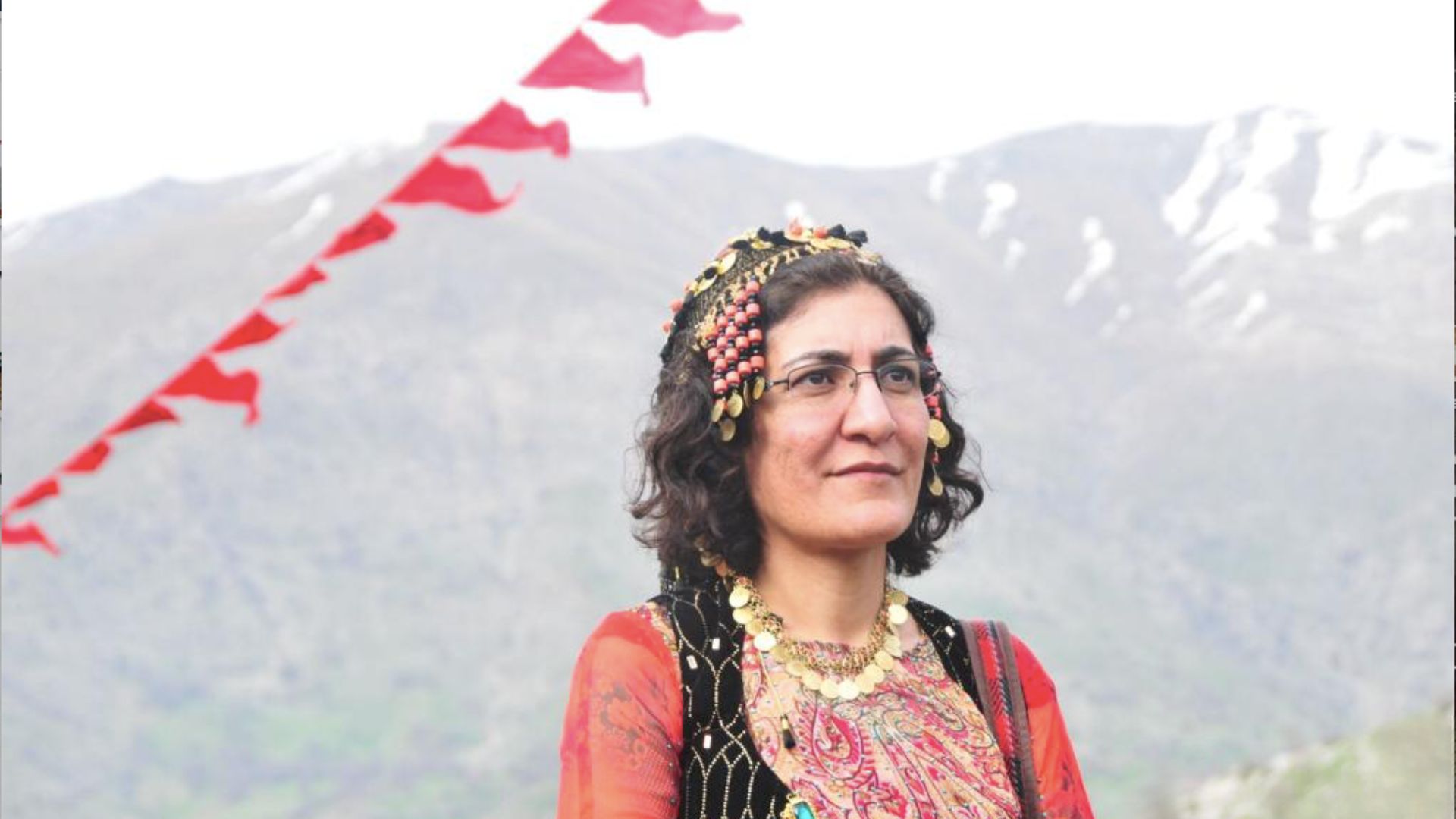
We are publishing excerpts from an article written by Nagihan Akarsel for Jineolojî magazine in 2018; in this way, we want to continue to remember Nagihan, who was murdered outside her home in Suleymaniya on October 4, 2022.
Nagihan Akarsel
Movement is a state of becoming. It is action, and it is alive. Therefore, it is difficult to define something that is alive. Focusing on the results of action implies the loss of details in the course of becoming. Thus, it is extremely natural to encounter difficulties in addressing the concepts of ethics and aesthetics—which are in movement, and draw their source from both the social fabric and the individual structure—either separately or on the basis of their mutual connections. Realizing this from the perspective of Jineology is even more difficult because it requires freeing one’s words and phrases from all the clear-cut definitions of positivism. Likewise, it requires being equipped against the limits imposed by positivism. It necessitates powerful methods, especially the hermeneutic method1, to be addressed on the axis of the democratic, ecological and women’s liberation paradigm. It is based on being free in emotion, in perception, in the power of thought and in narration, and consequently on being fluid.
The subject of this article is not so much to define two concepts, but rather to try to understand them on the basis of their counterparts in life. It is about understanding what it means to “be good and be beautiful,” an expression we frequently use in daily life. It is about investigating the shared universal framework, but also observing how definitions of good and beautiful change according to different criteria, and understanding their sources. In this sense, it is about knowing how and on what basis we will form the language, action, and theory of good and beautiful. That is, it is about focusing on how good and beautiful will be organized through Jineology.
It cannot be a coincidence that, although it is precisely women who think about good, protect the beautiful, and ensure socialization with it, today they are the most alienated. As women, recreating that power of socialization is only possible by embracing utopia2 against the imposed dystopia3.
Being Beautiful and Collective Measures
Aesthetics, which is the science that leads to knowledge of the beautiful, is a concept too broad to be confined to the fields of philosophy and art. Moreover, considering aesthetics solely as the female body that responds to male desires is a conscious attempt by capitalist modernity4 to create a distorted perception. It is more significant to define the concept through examples from times when everything that added value to life and beautified it was considered sacred and beautiful.
Abdullah Öcalan’s statement, “I do not consider any beauty beautiful outside of moral and political society. Beauty is moral and political”5, tells us what the fundamental measure of beauty should be. Indeed, in all cultures, heroes, goddesses and religious sects have always shown the way of beauty, goodness and truth. Women were described in these cultures as a source of beauty in which sacredness was embodied.
Beauty, fertility, goodness, and truth, in agricultural societies organized around women, found meaning in the belief in goddesses. Beginning with Inanna, Ishtar, Demeter, Isis, Astarte, Kubaba, Atargatis, Anahita, Al-Uzza and Aphrodite – depicting all goddesses as sources of fertility, love, and beauty – represented the agricultural tradition of society and its moral and political way of life.
Another important definition of beauty found meaning in collective values. Those who adopted the motto “the ethical question is the beacon of the wise”6; the brave and the generous; those who lived in community; those who opposed injustices; those who represented justice; were considered beautiful. Poems, paintings, epics, stories, sayings, dengbêjî7, and many other art forms, told of this. It was represented in many works of art, primarily sculptures, musical pieces, paintings and architecture. Healers who devoted themselves to the healing tradition for a healthy life were seen as a source of beauty. In short, the principles of beauty were the values of communal creation.
However, the principle of beauty began to change with the development of state civilization. Greek philosophers defined the measure of beauty with ideal numbers and mathematical proportions.
Aesthetics is the beautification of life. As long as we do not beautify life, all beauties are in danger. All the beauties of nature are targets of capitalists. Human beings, as part of nature, are constantly exploited physically, psychologically and in their labor, becoming increasingly alienated from themselves. It is impossible to speak of beauty where there is alienation.
Being Good
When it comes to human and social problems related to the social fabric and individual structure, it is rather difficult to define an abstract concept. These abstract concepts are also relative. It is possible that what is good for me may be bad for someone else. What is determining here is the point of view.
The definition of good and its connection to morality has made it a subject for religion and philosophy, while science has remained distant from this concept. The fact that science moves within the limits of positivism and has lost its connection with meaning is decisive for this position. However, Abdullah Öcalan, who says “Science is an interpretation of meaning”8, reveals that where there is meaning, there is science. Meaning is also a way of adding value.
“Our dignity is based entirely on thought. Let us therefore strive to think well. This is the principle of ethics”9. The truth revealed in this sentence expresses the importance of thinking. Good is what is useful. Good is one who thinks well. Good is what is right. Good is what contributes, strengthens, gives meaning, and makes both society and the individual happy.
Good has some universal principles. While modesty is a measure of goodness, in the virtual world it is considered a weakness. While listening was once a virtue, today the most cultivated action is talking a lot. While empathy is one of the most beautiful human characteristics, selfishness now enjoys greater popularity. While speaking and defending the truth at any cost was a fundamental characteristic of good, in our era this quality is addressed in relation to pragmatism. These are all results created by liberalism. In liberalism, it is above all the interests, desires, feelings and impulses of the individual that are essential. In place of right thinking, a meticulous and detail-oriented approach is adopted.
In times when life was conceived as a whole, the criterion for considering something scientific in all areas of life, from economy to health, from politics to culture, was the principle of usefulness to society. Today, however, science is an organization that seeks to shape society from above, rather than an action that regulates social resources and relationships.
The Action of Good and Beautiful Among the Women of Gilan
In our search for good and beautiful, the moments we will take as a basis are those in which society’s power of coexistence is in harmony with the fabric of life. The Gilani people, who live in the Gilan province on the Caspian Sea coast in northern Iran, can be taken as an example. The work of harvesting rice and tea, which requires extreme delicacy and effort, permeates their entire life.
It is noteworthy that the people of Gilan, who live by the virtue of leaning on their roots, particularly love the lotus flower and the poems and songs they have created about it. The way they adopt and still preserve today the flower of Anahita10, the goddess of water, expresses both their connection to their roots and their quest to revive memory in the present. This and many other similar examples are the good news that an alternative life is possible, even for human beings who today live in a state of memory deprivation.
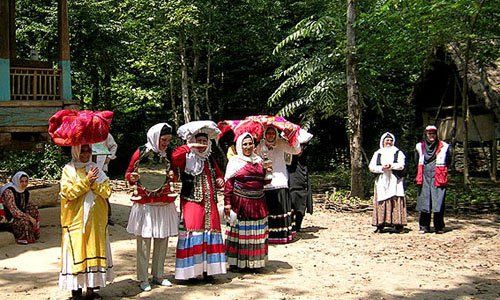
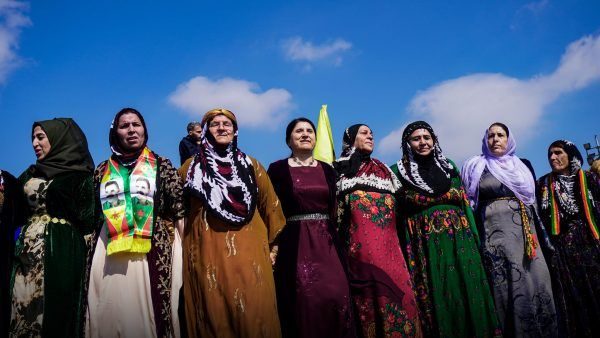
It deserves attention that the women of Gilan show analogies with the women of Afrin, who led the Afrin resistance. The dance of the women of Gilan, with their rice baskets and colorful clothes, and the connection of the women of Afrin with nature and land as the basis of their resistance, provides a striking example of how agricultural production is reflected in aesthetics.
The Mondine and Their Resistance
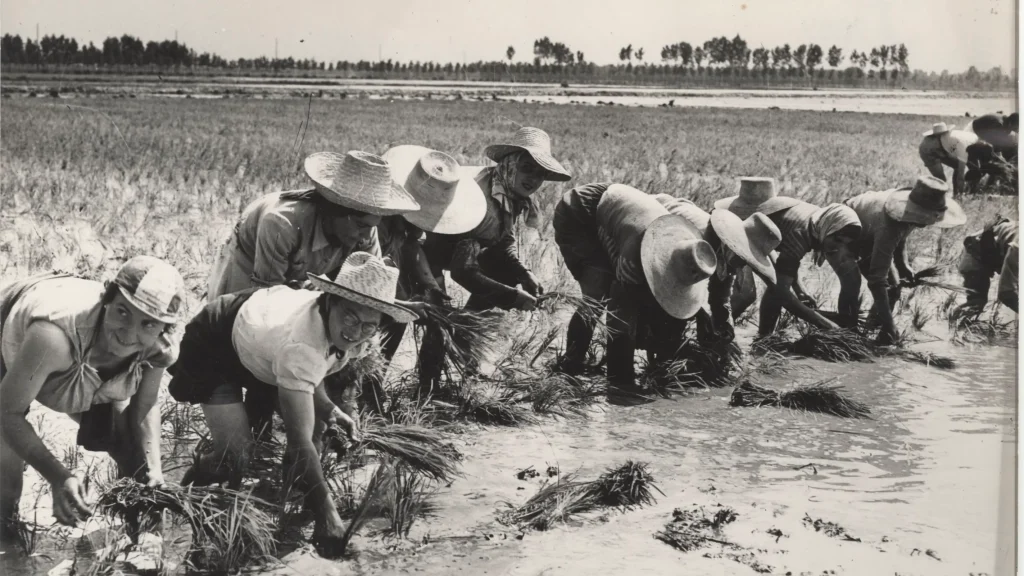
The rice workers, called “mondine” in Italy, the largest rice producer in Europe, enrich the example we have provided of the women of Gilan. Flora Derounian, who conducted research on rice workers in Italy between 1940 and 1965, states that she based her research on interviews and documentary projects11. Flora Derounian observes that the work of these women, which ran from May to July, deserves to be studied further, stating: “Although the glass mirrors of the underwater rice paddies may seem bucolic, the rice fields often resounded with the sound of the workers’ protest songs. To avoid being punished for talking during work hours, they had developed an incredible repertoire of polyphonic songs, which usually lamented the miserable working conditions and the exploitation by the masters.”
The rice workers, who fought for the liberation of Italy from Nazi occupation; who sometimes refused to work in the fields; who sometimes worked in left-wing organizations; who fought and acted as couriers; were perhaps aware that the delicacy of their work, and the delicacy of defending their land, complemented each other. Perhaps it is not possible to fully understand this state of awareness, but the fact that the songs of these women, who became a cult with their songs and costumes, are today performed by choirs and youth rock groups, tells us much about the integrity of life.
Being Different and the Roma
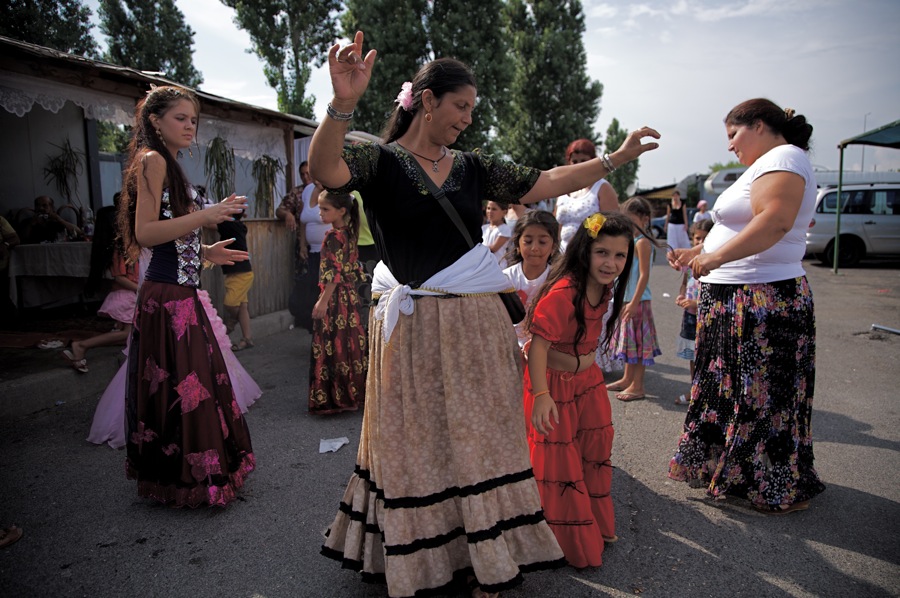
Each of us has different narratives about the Roma12. The disturbing unease of not knowing what to think every time we see Roma women – even though the energy reflected in their voices, behaviours, and dances is fascinating, there is always that feeling of not knowing how to perceive them. This emotional condition is also important for understanding our perception of good and beautiful. The most common opinion about Roma is that they are marginalized from society; unsuitable; not conforming to society’s moral norms; undisciplined; and similar things. This creates a prejudice that, although their fluidity and spontaneity are attractive, leads us to judge them and keep them at a distance.
Our discomfort with the ease of Roma women – the fact that their fluidity paralyzes us – is actually a matter that deserves separate analysis. We are talking about a people who have united their authenticity with their freedom. What we want to emphasize here is by what criteria we determine what is good or beautiful, and what determines our perceptions.
Because rejecting what is different a priori is a very common prejudice in our era. Not believing that what is different can be good and beautiful contributes to the perpetuation of this prejudice. The parameters that determine our perception are the parameters of modern times, that is, of modernity. Maintaining that these are correct is the most important and profound mental structure created by modernity.
However, the principle of beautiful and good should go in the direction of understanding the mythology, philosophy, beliefs and worldview of Roma women, rather than expressing direct judgments. It is also important to note how Roma maintain a collective life fabric, because they have a structure that preserves their vital fabric without depending on state organization.
Looking and Understanding Paradigmatically
Starting from this example, analyzing what is different requires a look from a paradigmatic point of view. If we consider them according to the mechanistic paradigm, Roma are defined as a people who do not conform to the criteria of modernity. They do not even respect the law of regularity of Newtonian physics. They also subvert cause-and-effect relationships and overturn the fact-based reality of positivism.
If instead we analyze them with the paradigm based on democracy, ecology, and women’s freedom, which represents the knowledge structures on which democratic civilization is based, we find a completely different reality. The source of this paradigm is the hermetic paradigm.
This paradigm, which is based more on people’s will to live together than on statism, is founded on principles such as unity of differences, vitality, fluidity, freedom, and uncertainty. There are no objections to considering it as a structure based on quantum physics. According to this paradigm, the Roma are a natural people who do not base their freedoms on any dependency relationship; who are based on a free economy; who give importance to music and entertainment; a relaxed and original people. However, they also carry with them some negative effects of modernity. What we want to emphasize here is what the principle of good and beautiful is in the different. It is important to treat difference not as a source of prejudice but, on the contrary, as paradigmatic richness.
The Women of Rojava as a Source of Beauty
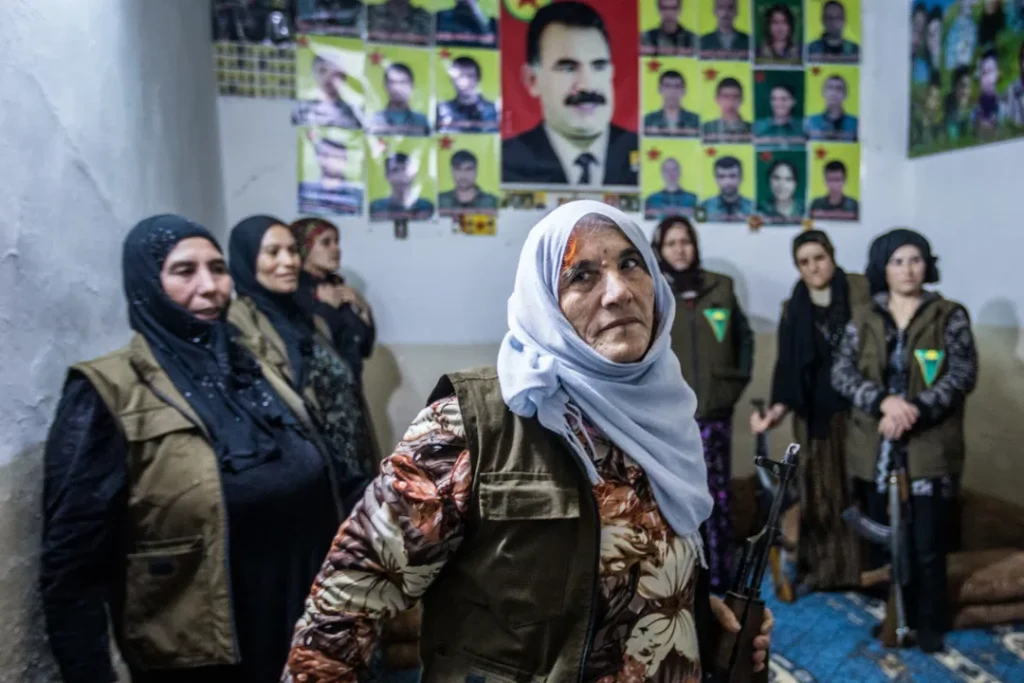 The organization of beauty, its constitution as a defensive force and its struggle against all injustices, manifested very clearly with the Rojava revolution, which is also characterized as a women’s revolution. If we consider the women’s revolution as a beautification of free life, it will not be difficult to understand how decisive the Women’s Defense Units that participated in the revolution were. It is particularly important to consider the fighters who fought against ISIS, projected onto the historical scene as the darkest force in the world, as women who saved not only Kurdistan but the entire world from darkness.
The fact that photographs of women fighters, who represent light against darkness, are on magazine covers and fetishized as beautiful warrior women, is a deliberately contrived situation. In this case, an approach was shown that focuses on formal beauty and highlights it, instead of focusing on women’s fighting power; the fighting tradition they draw upon; the paradigm they are based on; or the goals they pursue. The struggle values that beautify these young women – who represent light – were a topic that was little discussed.
Form and content complement each other. The principle of beauty is the reality in which content and form complement each other. Addressing it unilaterally is the fundamental characteristic of the system. However, only if we manage to make ethical and aesthetic values prevail in all areas of life can we achieve true beauty and be a source of beauty. In this sense, the beautification of life is achieved, first of all, by fighting against the evil and ugliness that surround us. The fact that women carry out their responsibility to beautify life scientifically through Jineology is also one of the prerequisites for a free and beautiful life. Such a reality of women is not only a source of beauty but also manages to be the fundamental moment of ethical and political society.
Conclusion
Examples can be multiplied of those who have created and made vital the language, action and theory of good and beautiful, and who, thanks to their efforts, have managed to protect their freedoms and particularities. Because realizing good and beautiful, registered in freedom, meaningful of collective values, and integrating individual creativity, is not impossible. This is, above all, our way of being. Perhaps we need to further strengthen the theory of our common life. To do more research and prepare materials that highlight these collective values. Perhaps we need to believe that these values ensure that people remain happy and healthy, as demonstrated by the women of Gilan; the mondine; Roma women; and the fighters of Rojava; this is not impossible. To believe that, in an era and in a system where spiritual values are devalued and utopia is consciously defined as an impossible ideal, it is possible to resist more than anything else with the knowledge of good and beautiful, with Jineology. That is, to resist our utopia against the consolidated dystopia.
1 Hermeneutics can be conceived as the art of understanding and interpreting both individual linguistic contexts and language as a whole.
2 A Greek word, formed by combining the prefix “ou” meaning “not,” with the word “topos,” meaning place. Utopia was first used by Thomas More, who published a book titled “Utopia.”
3 A word formed by combining two ancient Greek terms: the prefix “dis,” meaning bad, with the word “topos” (actually the word is topos), meaning place. Dystopia was first used by John Stuart Mill. George Orwell’s 1984 or Margaret Atwood’s The Handmaid’s Tale are considered dystopian works in literature.
4 Capitalist Modernity is based on capitalism, industrialism, and the Nation State, and is in opposition to Democratic Modernity, founded on direct democracy, social ecology, and women’s liberation. To learn more: Abdullah Öcalan, Manifesto of Democratic Civilization Book 3: Sociology of Freedom. Milan: Punto Rosso, 2023.
5 Abdullah Öcalan, Manifesto of Democratic Civilization Book 3: Sociology of Freedom. Milan: Punto Rosso, 2023.
6 William Shakespeare, Troilus and Cressida, trans., Mina Urgan and Sebahattin Eyüboğlu, Istanbul: Cultural Publications of the Turkish Bank, 2014, Act 2, Scene 2.
7 Folk songs that tell exciting and painful stories and experiences. They are a fundamental part of the oral culture of Kurdistan.
8 Abdullah Öcalan, Manifesto of Democratic Civilization Book 3: Sociology of Freedom. Milan: Punto Rosso, 2023.
9 Blaise Pascal, Pensées, trans., Devrim Çetinkasap, Istanbul: Cultural Publications of the Turkish Bank, 2017. Michael Shermer, The Science of Good and Evil, trans., Sinem Gül, Istanbul: Varlık Publishing House, 2004.
10 The lotus is a sacred symbol especially in Asia that refers to the purity of the soul. It symbolizes purity and cleanliness in dirt. As a symbol of this quality, it has a wide geographical diffusion. In ancient Persia, it is valued as the rose of the goddess Anahita. Aydın Afacan, “Mythopoetic Dynamics in the Lotus,” Journal of Folklore/Literature, volume: 20, Issue: 80, 2014/4, 119-128.
11 “The Rice Working Women Who Challenged Fascism in Italy,” Evrensel, March 18, 2018, https://www.evrensel.net/haber/347977/italyada-fasizme-kafa-tutan-pirinc-iscisi-kadinlar (Last Access: November 14, 2022).
12 During the writing, the predominance of an individual style in my writing was a reality I noticed with this text. I also discovered that written language has its subtleties and guides the emotion related to the subject narrated on its own initiative, an aspect I discovered in relation to this topic.
To read more about Nagihan:
https://jineoloji.eu/en/2022/10/17/in-memory-of-nagihan-akarsel/
https://jineoloji.eu/en/2022/10/06/video-nagihan-akarsels-work-in-her-own-words/